
Coding Architecture I–II, ETH Zürich

ARCHITECTURE
Gramazio Kohler Research ETH Zürich
STRUCTURAL ENGINEERING:
Gramazio Kohler Research ETH Zürich
LOCATION
Zurich, Switzerland
STATUS
Completed, 2025
Coding Architecture I–II is a programming class for architects with particular focus on demystifying technology – both software and hardware – and exploring the programmability of our world through powerful methods of digital, computational, and algorithmic design.
The course begins with the fundamentals of Python and gradually builds toward more complex topics, including computational geometry with the COMPAS framework, graph-based structures, and cell networks.
In the spring semester, students shift from principles to practice, working with the compas_timber library to design and fabricate reciprocal frame structures. The course culminates in the construction of a full-scale timber pavilion – a hands-on application of digital timber design at 1:1 scale.
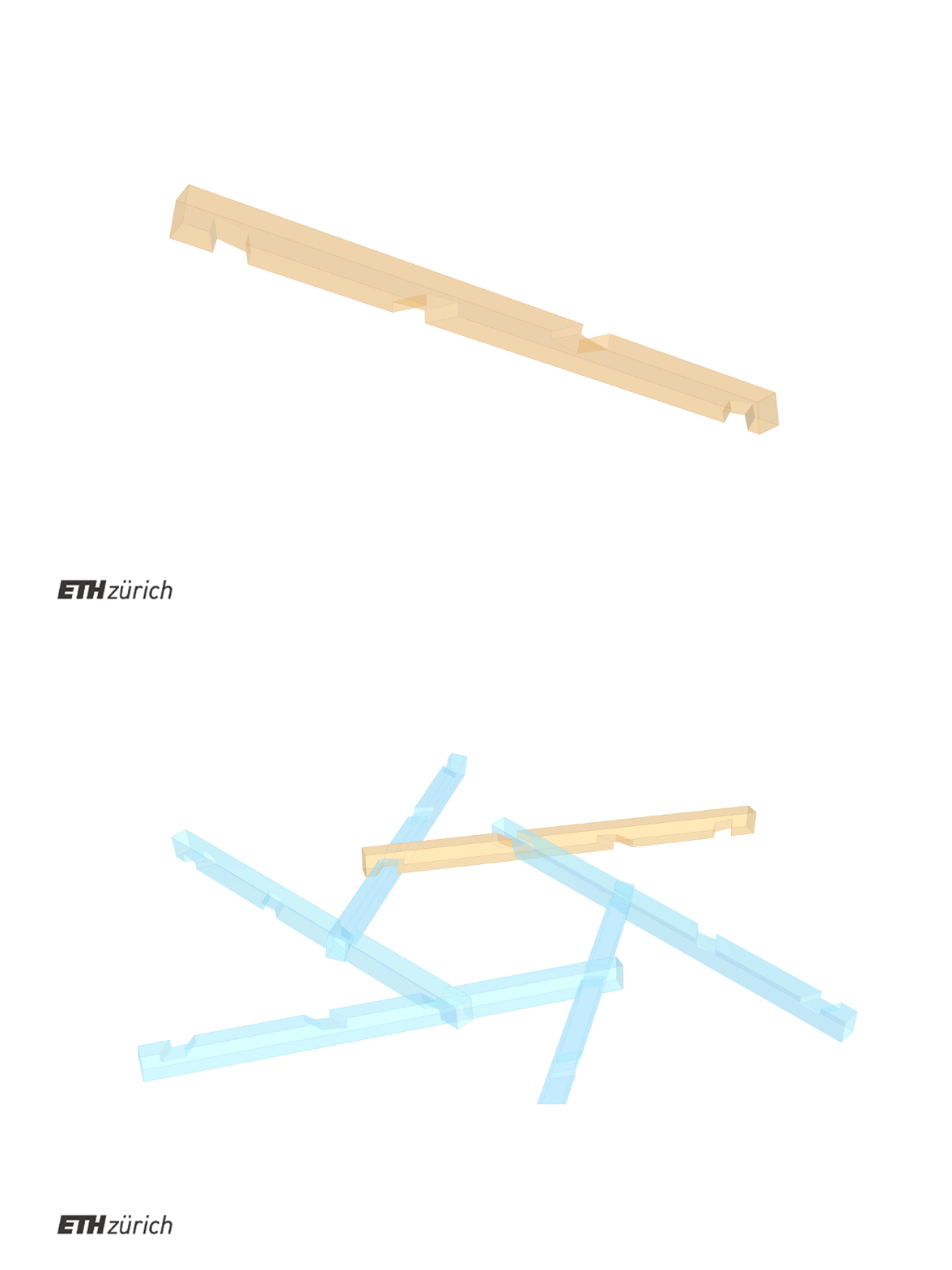
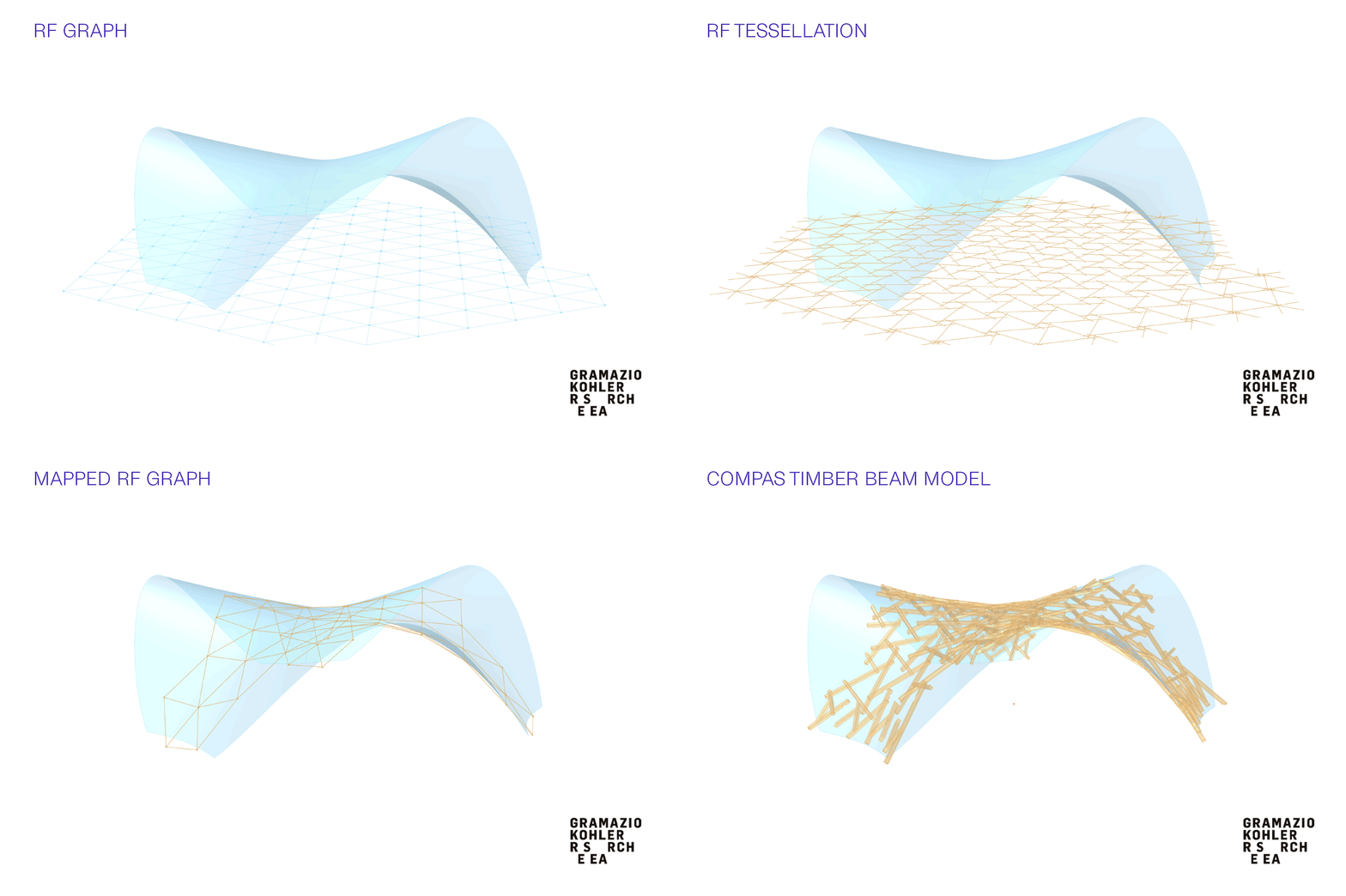
Karamba3D enabled the exploration of the solution space early on and reliably guided the team from design through to fabrication and construction within just twelve weeks. It played an important role during both the early development and construction phases. The software was used throughout the development of the reciprocal frame system to study how different geometric configurations and beam strengths performed. Each stage of the structural system and half lap joint design was repeatedly verified with Karamba3D, allowing the team to develop a strong intuition for the overall structural behavior.

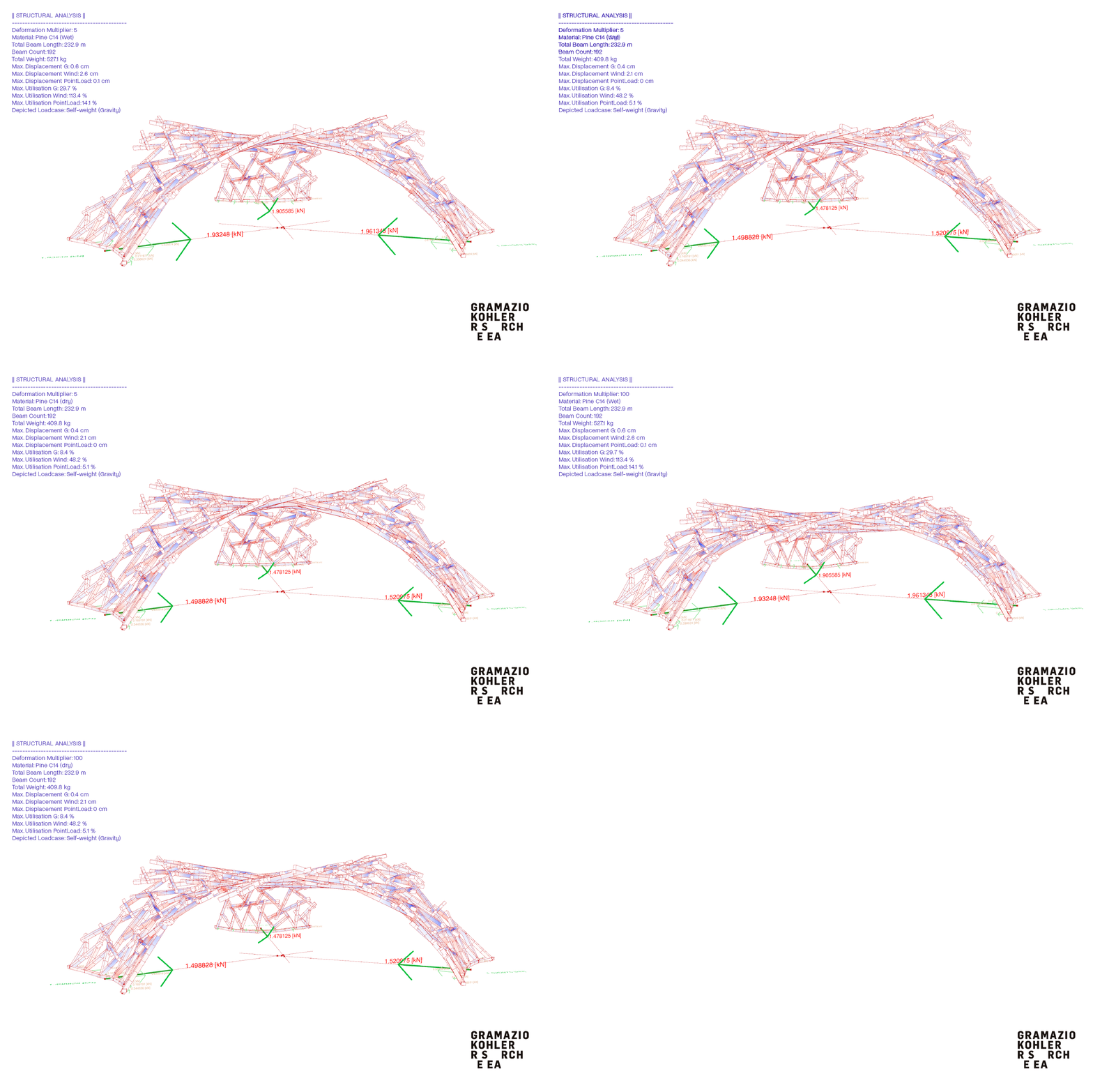

During construction, Karamba3D enabled the evaluation of beam utilization and provided reliable feedback on the structural behavior under various load cases, including wind and point loads. The team also assessed performance under reduced material properties resulting from prolonged exposure to rain and temperature fluctuations.
Karamba3D’s reaction force readouts proved particularly valuable in developing a tensile system to counteract horizontal support forces, allowing the structure to be built without foundations. It was further used to verify the structural behavior and effectiveness of additional bracing and footing design.

Karamba3D was introduced early in the prototyping stage, enabling rapid testing of structural layouts and guiding key design decisions from the start. It was later used to simulate varying material properties influenced by weather conditions and to evaluate structural performance under wind and point loads, such as people interacting with the structure.
Alongside Karamba3D, the team employed a fully Python-based workflow using the COMPAS framework, which allowed direct integration of structural analyses into the design finalization process. COMPAS Timber was used to generate a semantic beam model and machine-agnostic fabrication files, while Kangaroo supported multi-objective optimization and mesh relaxation.


Project Credits:
Coordination
Lorin Wiedemeier
Lecturer
Gonzalo Casas
Project Proposal
Nicolás Egon Wittig, Samuel Tanner
Teaching Team
Gonzalo Casas, Lorin Wiedemeier, Lancelot Burwell, Eric Gozzi, Katerina Katsarou, Halima Hassan, Francesco Milano, Alexandra Moisi, Fabio Gramazio, Matthias Kohler
Machining
Panos Papacharalambous, Lorin Wiedemeier, Gonzalo Casas
Assembly
Lorin Wiedemeier, Gonzalo Casas, Panos Papacharalambous, Konstantina Laki, Alexandra Moisi, Katerina Katsarou, Matthias Helmreich, Lancelot Burwell, Quentin Wiesmath, Nicolas Egon Wittig, Samuel Tanner, Aaron Senn, Basil Kretz, Jamie Ramos, Luca Petrus, Tobias Hartmann, Sukhdevsinh Parmar
Consulting
Udo Thönnissen, Lluis Enrique, Michele Capelli, Michael Lyrenmann, Luca Petrus, Tobias Hartmann, Ananya Kango, Ania Apolinarska, Victor Leung, Oliver Bucklin, Clemens Preisinger, Alessandro Tellini, Fritz Graber, Fabian Egger
Photography
Lorin Wiedemeier, Alessandra Gabaglio
Gramazio Kohler Research